Brown vs. White vs. Pink Noise: Which One Actually Blocks Your Neighbor's Noise
This article contains affiliate links. If you buy something through one of them, we may earn a commission at no extra cost to you. See our disclosure policy for details.
The right masking noise depends entirely on what your neighbor is doing, not personal preference. Deep thuds and bass need a different frequency than barking or talking. Here's which color of noise matches which noise problem.
White noise
White noise carries equal energy across all frequencies, which makes it especially effective for masking sharp, high-pitched sounds like a barking dog, screaming kids, whistling wind, or nearby talking. The tradeoff is that at higher volumes it can start to sound harsh or piercing, which some sleepers find hard to tolerate for a full night.
Brown noise
Brown noise emphasizes deep, low frequencies, sounding like a heavy waterfall or a distant jet engine rather than static. Because of that low-frequency emphasis, it's the most effective option for masking the deep thuds of heavy footsteps, slamming doors, and vibrating bass or subwoofers coming through a shared wall or ceiling.
Pink noise
Pink noise sits between the two: deeper and softer than white noise, but crisper and less bass-heavy than brown noise. It sounds close to steady rain and works well as a general, all-purpose masking sound for typical apartment ambient noise rather than one specific noise type.
Comparison table
| Noise type | Sound character | Best for |
|---|---|---|
| White noise | Equal energy, higher pitch, can sound harsh | Barking dogs, talking, high-pitched sounds |
| Brown noise | Deep, heavy, like a waterfall or jet engine | Footsteps, slamming doors, bass, subwoofers |
| Pink noise | Balanced, like steady rain | General ambient apartment noise |
How to play it for maximum effect
To mask heavy bass or stomping specifically, play brown noise through a dedicated Bluetooth speaker with a real subwoofer, placed close to the shared wall or ceiling where the noise is entering. A phone's built-in speaker can't reproduce the low frequencies that make brown noise effective, so the speaker choice matters as much as the noise type itself.
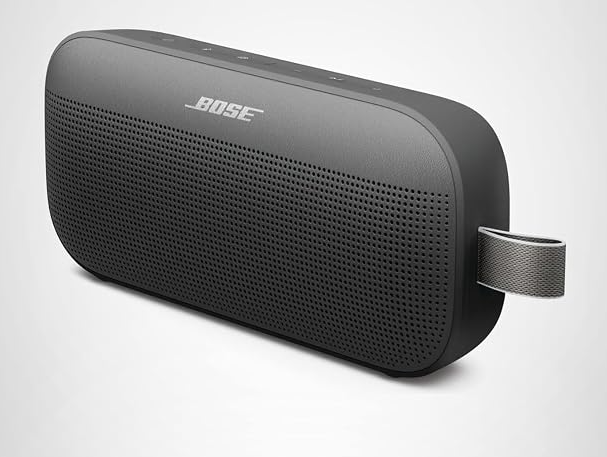
Recommended: Bluetooth speaker with subwoofer for brown noise masking.
If you'd rather not run a speaker all night, see our best white noise machines guide for dedicated devices built for continuous overnight use.
FAQ
Which noise color is best for a neighbor's TV or voices? White noise, since it's most effective at covering the higher-pitched frequencies found in speech and typical TV audio.
Which noise color is best for an upstairs neighbor who stomps? Brown noise, played through a speaker with real bass response, is the community favorite for masking heavy footsteps and impact noise specifically.
Can I just use my phone speaker to play brown noise? You can, but it won't reproduce the low frequencies that make brown noise effective against bass and impact noise. A dedicated speaker with a subwoofer, or a purpose-built white noise machine, performs noticeably better.
Is pink noise a safe default if I don't know which type of noise I have? It's a reasonable starting point for general ambient noise, but if you can identify a specific problem, footsteps versus barking versus traffic, matching brown or white noise to that specific sound will usually perform better than the pink noise middle ground.
The renter's bottom line
Match the noise color to the noise problem: brown for bass and footsteps, white for barking and voices, pink if you want one general-purpose option. The speaker or device you play it through matters almost as much as the color you choose, especially for brown noise.
Part of our complete guide to apartment noise.
Related Guides
Tools & Resources
Can I Break My Lease Because of Noisy Neighbors? A Renter's Legal Playbook
Noisy neighbors alone rarely justify breaking a lease penalty-free. Here's the actual legal standard, what you need to document first, and safer alternatives.
Tools & Resources
Does Soundproofing Foam Actually Work in Apartments? (An Honest Answer)
Soundproofing foam absorbs echo, it doesn't block a neighbor's noise. Here's the honest physics, what foam is actually good for, and what to do instead.
Tools & Resources
How to Tell If Noise Is Coming Through the Wall, Floor, or Window
A quick, practical way to figure out whether apartment noise is entering through the wall, floor, or window, so you fix the right thing instead of guessing.