How to Sleep Through Noisy Neighbors: 5 Tactics That Actually Work
This article contains affiliate links. If you buy something through one of them, we may earn a commission at no extra cost to you. See our disclosure policy for details.
Once you've sealed the gaps and added the mass you reasonably can, some noise will still get through. At that point the goal shifts from blocking sound to managing your reaction to it. These five tactics cover both the physical and mental side of actually falling asleep.
1. Bluetooth sleep masks
For side sleepers who find headphones and earbuds too bulky, soft fabric sleep masks with built-in flat speakers, like Musicozy, let you stream continuous rain or masking sound right next to your ears without anything pressing painfully into a pillow.
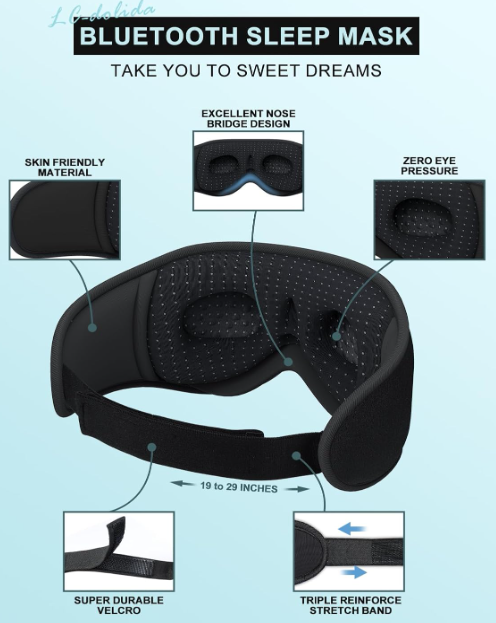
Recommended: Bluetooth sleep mask with flat speakers.
2. The heavy pillow method
A simple, no-cost trick: place a second heavy down or memory foam pillow directly over your head to act as a physical sound buffer. It's not a substitute for real soundproofing, but it takes the edge off sharp, sudden noises enough to matter for some sleepers.
3. Masking sound
Which masking sound works best depends on what kind of noise you're dealing with. Brown noise (deep, low-frequency, like a distant jet engine) is generally the most effective at covering heavy footsteps, slamming doors, and bass. White noise covers sharp, high-pitched sounds like barking or talking. See our full brown vs. white vs. pink noise guide for which to use for your specific noise problem.
4. Earplugs built for sleeping
If masking sound alone isn't enough, or you can't play audio all night, a comfortable earplug designed for sleeping, rather than standard foam, adds a second layer of defense. Our best earplugs for sleeping guide compares the options for side sleepers specifically.
5. Mental reframing
Hyper-focusing on a noise creates an adrenaline spike that actively prevents sleep, regardless of how loud the noise actually is. Treating a neighbor's noise like unpredictable weather or traffic, something outside your control rather than a personal intrusion, measurably lowers the stress response that keeps you awake. This won't fix the noise, but it changes how much power it has over your night.
FAQ
Is a Bluetooth sleep mask better than regular headphones for sleeping? For side sleepers specifically, yes. The flat speaker design avoids the bulk and pressure of standard headphones or earbuds, which can be uncomfortable or fall out during the night.
Does brown noise work better than white noise for every kind of noise? No, it depends on the noise. Brown noise is best for low, heavy sounds like footsteps and bass. Sharp, high-pitched noise like barking or voices is often masked more effectively by white noise.
Can mental reframing actually help me fall asleep, or is that just a coping platitude? It's a real physiological effect. Reducing the perceived threat of a sound lowers the stress and adrenaline response that keeps your brain alert, which is a meaningful factor in how quickly you fall asleep, even though it doesn't reduce the noise itself.
Should I combine several of these tactics, or pick just one? Combining works better for most people. A masking sound plus a comfortable earplug covers more noise types than either alone, and the heavy pillow method costs nothing to add on top.
The renter's bottom line
Physical soundproofing has diminishing returns once you've sealed the obvious gaps. From there, the highest-leverage moves are matching your masking sound to the type of noise you're dealing with and finding a sleep setup, mask, pillow, or earplug, that's actually comfortable enough to use every night.
Part of our complete guide to apartment noise.
Related Guides
Tools & Resources
Can I Break My Lease Because of Noisy Neighbors? A Renter's Legal Playbook
Noisy neighbors alone rarely justify breaking a lease penalty-free. Here's the actual legal standard, what you need to document first, and safer alternatives.
Tools & Resources
Does Soundproofing Foam Actually Work in Apartments? (An Honest Answer)
Soundproofing foam absorbs echo, it doesn't block a neighbor's noise. Here's the honest physics, what foam is actually good for, and what to do instead.
Tools & Resources
How to Tell If Noise Is Coming Through the Wall, Floor, or Window
A quick, practical way to figure out whether apartment noise is entering through the wall, floor, or window, so you fix the right thing instead of guessing.